
An Open Exchange on New Breeding Technologies at the first NRP 84 Dialogue Day
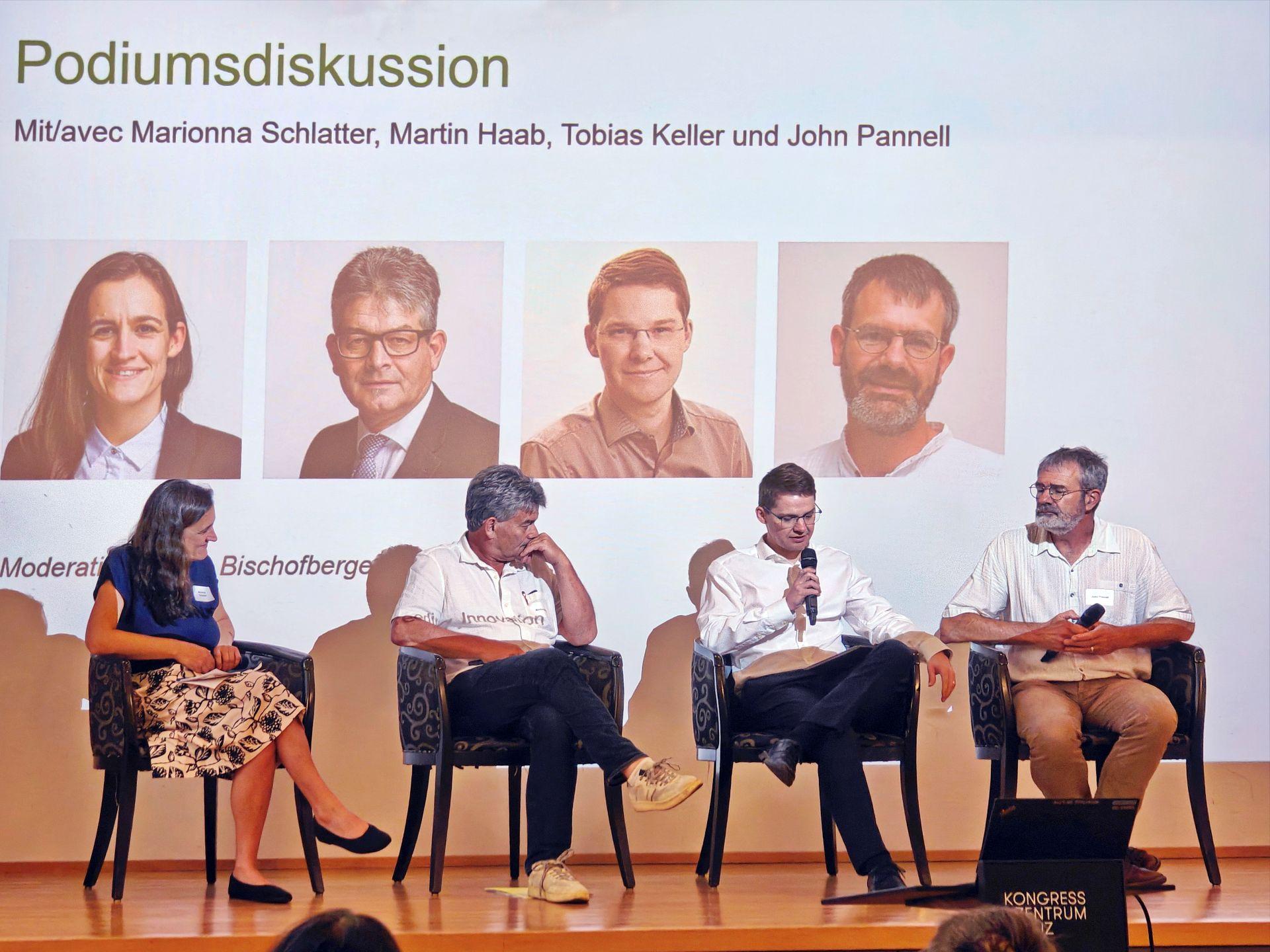
Close to 60 attendees interested in New Breeding Technologies (NBTs) came together in Bern for the first NRP 84 Dialogue Day. In a relaxed atmosphere, they discussed different perspectives on the topic.
On 26 June 2026, the first Dialogue Day brought together researchers, politicians, NGO representatives, businesses and administration, as well as many other stakeholders. Each group had a different approach to and view of NBTs. Rather than talking past one another, participants were encouraged to listen to one another's views, and the calm and open setting allowed these views to be expressed without hardening into opposing sides.
One of the day's highlights was the visit of two National Councillors from opposing political camps: Marionna Schlatter and Martin Haab. This gave the dialogue with politics real weight. The subsequent panel discussion, moderated by Mirko Bischofberger, examined the extent to which NBTs differ from traditional GMOs, considered the economic realities of the field, delved into societal surveys, and examined Europe's recently enacted regulations. Some familiar but unresolved themes also emerged, including coexistence, diversity, consumer choice and patents.
Of tomatoes, laws and more
The research session focused on how issues surrounding NBTs were addressed within NRP 84. Professor Sebastian Soyk from the University of Lausanne inspired the audience with his perspective on how NBTs can promote diversity. Meanwhile, Professor Véronique Boillet, also from the University of Lausanne, and Professor Rui Mata from the University of Basel offered initial insights into their work on law and media perception.
In the afternoon, three fundamental themes were covered in parallel workshops: What is the relationship between NBTs and nature? What should a fair patent system for NBTs take into account? How can consumer’s freedom of choice be ensured, including the option to choose alternatives to NBTs? Participants were encouraged to engage in open discussion and active listening.
A second edition is planned for 2027.